Before and After: What a Shrink Wrapping Machine Changes in a Small Workshop
Three of us handled every order in my small unit: cutting film, folding cartons, taping, and stacking finished bundles by hand. Packing started after lunch and often ran past dinner. The day an Automatic Shrink Wrapping machine arrived on our floor, the routine we had built for years stopped working — in a good way. This is an honest, owner-level account of what changed before and after, written for workshops with limited staff.
Before the Machine: Packing Was a Bottleneck We Planned Around
Our packing corner had one table, a manual sealer, and a heat gun. Every carton needed a film sleeve, a hand seal, and a pass under the gun until the wrap looked tight enough to survive transport. It worked, but it governed the whole day.
The first problem was speed. A single operator could seal and shrink maybe a few dozen bundles an hour, and quality depended on who was holding the gun. The second problem was consistency: one person’s tight wrap was another person’s loose corner, and customers notice loose corners.
The third problem was the hidden cost. We ordered film in small rolls because we had nowhere to store bulk, which meant higher per-meter prices. We also scheduled dispatch around packing capacity, not around production capacity. Packing quietly set the ceiling for everything else.
After the Machine: How Daily Work Actually Shifted
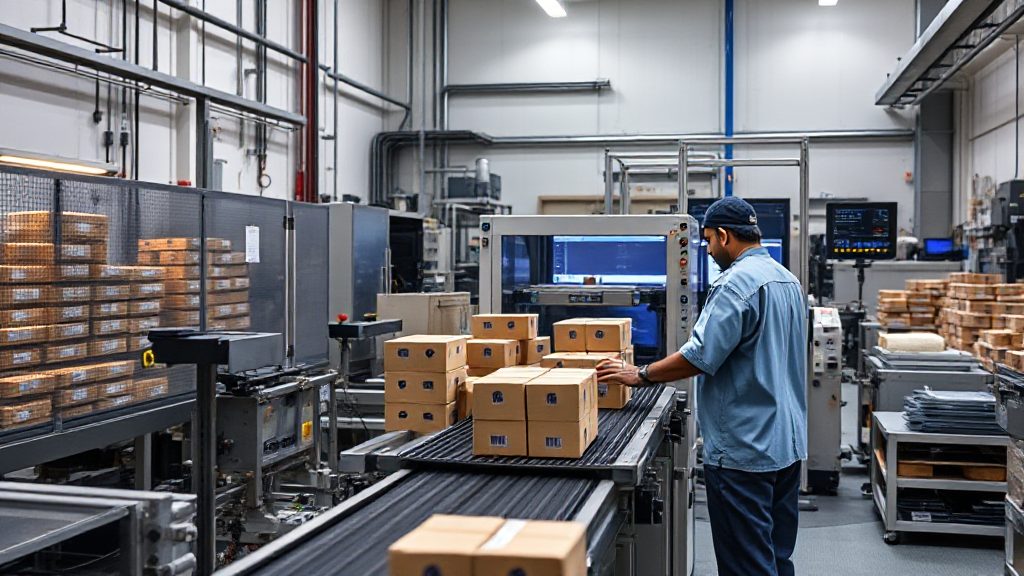
The new unit combined a sealing section with a shrink tunnel Machine, so the film wrapped and tightened in one continuous pass. We did not need a bigger team; we needed a different division of labour. Here is what changed on the floor.
The Packing Role Became a Machine Role
Instead of two people sealing and one taping, one person now loads products and monitors the pass-through, and the other two moved to finishing, labelling, and dispatch preparation. The machine did not remove people — it moved them to work that had been waiting all along.
Training took less time than I expected. Loading, checking film alignment, and watching the tunnel temperature became the core skills. The tricky part was teaching the team to stop correcting wraps by hand and instead adjust the machine settings.
Throughput Became Predictable
The biggest surprise was not raw speed but rhythm. Because the machine runs at a steady rate, we could estimate packing time per order and slot dispatch realistically. Predictable packing time changed how we quoted delivery dates.
We also stopped batching small orders to justify setting up the manual gun. Small runs became normal, which helped customers who order frequently in modest quantities.
Film and Consumable Habits Changed
With a consistent sealing bar and tunnel, we could use standard film rolls instead of the narrow rolls we used to buy. Buying in larger quantities lowered our per-unit film cost, and the tighter wrap reduced rework on damaged corners.
We learned quickly that film grade matters more than film thickness alone. A roll that ran poorly on the manual gun sometimes ran perfectly on the machine, and vice versa. Testing two or three grades before committing to a bulk order saved us from a costly mistake.
Maintenance Entered the Weekly Routine
A machine adds a maintenance habit. We now check the sealing blade, clean the tunnel interior, and inspect the conveyor at the end of each week. Skipping maintenance shows up first as inconsistent seals, not as a breakdown.
Spare parts availability mattered more than I anticipated. Before choosing the unit, confirm that blades, belts, and heating elements are easy to source locally; downtime on a packing line is expensive for a small unit.
What We Had to Rearrange
The machine needed floor space, a stable power supply, and clearance for loading and unloading. We moved a storage rack and rerouted one cable line. That was the entire physical change, but it had to happen before installation day, not after.
Noise and heat were manageable in our workshop, but we placed the unit away from the quality-check table so the tunnel’s warmth would not affect sensitive products. Small layout decisions like this prevented daily friction.
The Real Difference: A Small Team With More Control
If you run a workshop with a handful of staff, the honest case for a Shrink wrapping machine is not that it replaces people. It is that it removes the daily guesswork around packing speed, wrap quality, and dispatch timing. Our team size stayed the same, but the work became calmer and more predictable.
Before you buy, watch your own packing corner for a week. Note where the delays happen, how much film you waste on rework, and how often dispatch slips because packing is behind. If those numbers look familiar, the change is probably worth it. If packing is already smooth and volumes are low, wait until the bottleneck is real. For us, the machine turned the last hour of the day from a scramble into a routine, and that alone made the decision easy to defend.